Movies in Your Head

One of the “advantages” of having a tedious day job which requires a certain amount of concentration but very little thought is that I can spend my shifts listening to my iPod. I’ve recently been addicted to old-time radio shows – among them The Shadow, Gang Busters, Escape, Inner Sanctum, Nero Wolfe, even an excellent western called Frontier Gentleman. The brain has a remarkable capacity for conjuring vivid images, in effect to create a movie in your head from the sounds you hear … I can still recall “visual moments” from radio plays I heard as a kid in England in the early ’60s. And this ability applies to pretty much any kind of sound – not just audio drama, but also music and songs.

The Inner David Lynch

crazy_clown_timeI’ve been meaning to mention for a while David Lynch’s CD Crazy Clown Time. I’ve been playing it quite obsessively since I picked up a copy over a year ago. Since Lynch seems to have put his filmmaking career on hold, devoting most of his time to proselytizing for TM, this CD is the best way for fans to get a Lynch fix.

Sound has been vitally important to his work since his very first short films; he’s always used sound effects and ambiences like music, giving his films richly textured and nuanced soundscapes. So it was a natural progression for him to become involved in music – teaming with Angelo Badalamenti was a significant step, not simply for the distinctive scores they conjured up for Blue Velvet, Twin Peaks, The Straight Story and so on, but also for the albums they created with Julee Cruise. The sound they developed now seems inseparable from Lynch’s films.

But he also experimented in other ways, with the dreamy ambient sound of Lux Vivens: The Music of Hildegarde von Bingen, which he produced with Jocelyn Montgomery, and the harsh grunge assault of Bluebob which he did with John Neff (who also worked on the Hildegarde project). Lynch has seemed as at home with these audio creations as he has always been with his visual work (film, painting, sculpture and photography).

Crazy Clown Time seems like a remarkable new stage in Lynch’s career; written and performed by him (with additional instrumental support from Dean Hurley, and vocals by Karen O on the opening track, Pinky’s Dream), it’s like a collection of Lynch movies etched in sound … dark, funny, disturbing, at times strangely sweet and infused with emotional yearnings. After INLAND EMPIRE, his masterful summation of everything he’d achieved in more than thirty years of filmmaking, Crazy Clown Time seems to indicate that he’s gone beyond movies into new, more impressionistic creative areas.

Lynch’s lyrics are full of vivid images and a number of the tracks have strong narrative lines; the more familiar you are with his movies, the more clearly you can “see” the songs as movies in your mind.

Lynch’s distinctive speaking voice, with its slight Midwestern nasal twang, proves very supple in the mix of spoken and sung lyrics, as he takes on a series of different personae, shifting from sexual aggression and threatened violence to redneck fun to plaintive longing touched with childlike innocence. Listening to the CD over and over, I find myself immersed in that strange, distinctly Lynchian world, surrounded by his twisted, fearful, sometimes dangerous, sometimes fragile characters, but ultimately shown a glimmer of light and the possibility of transcendent emotion.

A number of the songs have been turned into YouTube videos of variable quality by people other than Lynch. These are a couple of the most interesting:

Crazy Clown Time

Good Day Today

*

The Making of an Exploitation Classic

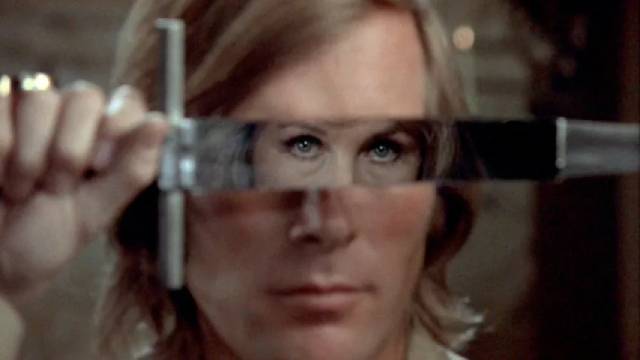
witchfinder_generalAnother item on my iPod which I’ve listened to repeatedly is a one-hour BBC radio drama from 2010 called Vincent Price and the Horror of the English Blood Beast. Written by Matthew Broughton, a British TV writer, it tells the story (I’m not sure how accurate) of the making of The Witchfinder General and the conflicted relationship between director Michael Reeves and his American star.

Reeves was only 24 when he made this, his third feature, and the play presents him as supremely confident in his abilities as a director – and deeply offended that the film’s American backers have forced him to take Price for the lead. His choice was Donald Pleasance, and that would have made for quite a different movie.

Broughton portrays Price as an insecure actor whose career is on the down slope; Reeves tortures and humiliates him into giving one of his finest performances without the actor even being aware of his own achievement until he finally sees the finished film.

The script is witty and observant of the tensions involved in filmmaking, particularly where ambition runs head on into a limited budget. Blake Ritson gives a terrific performance as Reeves, with excellent support from Kenneth Cranham as exploitation producer Tony Tenser (who narrates) and a fine supporting cast. The only real weakness is Nickolas Grace’s inability to capture Vincent Price’s distinctive voice, though otherwise his performance balances Ritson’s very well.

The play is almost enough to convince me of Reeves’ potential for greatness – a burden his memory has had to carry since his early death at 25. I must admit that I wasn’t terribly impressed with The Witchfinder General when I first saw it years ago, but I’ve grown to appreciate it over the past decade or so as I’ve watched it a number of times on DVD, and it certainly has a more serious tone than the Price/Corman Poe series. But I still prefer Reeves’ more imaginative, if somewhat less polished, second feature, The Sorcerers (1967), with Boris Karloff giving his second-last truly great performance (followed the next year by Peter Bogdanovich’s Targets).

Whether or not the play is accurate as history, it’s an entertaining and convincing account of the filmmaking process and an unexpected mainstream tribute to the brief career of Michael Reeves.

Posted in Uncategorized | Tagged , , | Leave a comment

Paul Thomas Anderson’s The Master

Freddie Quell (Joaquin Phoenix), a traumatized WW2 vet in Paul Thomas Anderson's The Master

Freddie Quell (Joaquin Phoenix), a traumatized WW2 vet in Paul Thomas Anderson’s The Master

As Felix Unger was fond of saying in The Odd Couple, “When you assume, you make an ass out of u and me.” Based on my experience of Paul Thomas Anderson’s previous films, which have been equal parts exhilarating and irritating, I didn’t bother to go and see The Master, which despite a lot of critical praise sounded like a festival of mannered acting.

Freddie Quell

Freddie Quell

It’s been apparent since his first feature, Hard Eight (1996), that Anderson is so enamoured of his actors that he isn’t willing to rein them in for the sake of the overriding drama. I became irritable about this tendency around the time of Magnolia, much of which I liked, but which overall was too overwrought, its moods unmodulated, its performances in perpetual high gear. It was even worse with There Will Be Blood, with Daniel Day Lewis cutting the ham thick enough to choke the audience. So the prospect of Philip Seymour Hoffman and Joaquin Phoenix going head to head in The Master didn’t seem appealing to me, and I assumed that the more critical reviews were the accurate ones.

Hard to hold a job

Hard to hold a job

And yet, seeing a copy of the Blu-ray in HMV for a reasonable price, I felt a sudden impulse to buy it … admittedly more for the inclusion of John Huston’s remarkable propaganda documentary Let There Be Light (1946) as an extra than for the feature itself. And despite a huge backlog of unwatched disks, I sat down to watch Anderson’s film as soon as I got home … and much to my surprise found myself riveted for almost two-and-a-half hours. In fact, it’s been a long time since I felt quite so engrossed by a movie.

To be honest, I’m still not quite sure what happened … or, in fact, what The Master is “about” in any literal or thematic way. The film creates a strangely hypnotic, immersive experience which has little to do with conventional storytelling, and yet it’s not simply a mood piece, an exercise in atmosphere; its details are precise and concrete.

Philip Seymour Hoffman as Lancaster Dodd

Philip Seymour Hoffmann as Lancaster Dodd

The first thing to notice is that Anderson has pulled back from the overloaded busy-ness of his earlier work, the cramming of character and incident into unruly narratives. And with this, he has also banished the overblown symbols and metaphors – the rain of frogs in Magnolia, Dirk Diggler’s huge dick in Boogie Nights. The images in The Master (shot in 65mm) have a luminous clarity which, combined with long fluid takes, gives the film a sense of stillness, a meditative quality which seems not simply a repudiation of that earlier overcrowded busy-ness, but also a direct refutation of the hyped up, jagged editing and excessively kinetic camerawork which all but define modern mainstream movie-making. Here, Anderson achieves a formal classicism within which his characters can live and breathe.

Amy Adams as Dodd's wife, Peggy

Amy Adams as Dodd’s wife, Peggy

And this is the essence of the film: rather than overwhelming the characters with technique, reducing them to mere component parts, The Master is a perfectly formed setting for the observation of two lives which collide, generate unexpected forms of emotional and psychological heat, and then drift apart again.

From a narrative point of view, little happens and nothing is ultimately resolved. But the process itself is endlessly fascinating.

the_master_03.jpegJoaquin Phoenix is Freddie Quell, a WW2 vet both physically and psychologically damaged by the war, his body twisted into a hunched, strangely simian question mark, his mind unable to connect properly with the people around him – his expression is one of permanent puzzlement as if he can’t quite figure out what being human means any more – and he’s prone to bursts of violence which seem oddly disconnected from anger, as if years of war have conditioned him to aggression as a natural state.

the_master_phoenix_02Purely by accident (drunk and disoriented one night, Freddie sneaks on board a yacht to sleep it off), he meets Lancaster Dodd (Philip Seymour Hoffman in a nicely understated performance), a character based on Scientology-founder L. Ron Hubbard. Dodd and his entourage are about to set sail for New York, but instead of kicking Freddie off the boat, Dodd is drawn to him, instinctively sensing in the damaged man a test case for his movement, the Cause. Dodd doesn’t believe that Man is related to Animal (as in Scientology, we are eternal intelligences trapped inside temporary earthly bodies) and here he finds himself confronted by a man who has seemingly reverted to animal form.

Freddie recognizes a good thing when he sees it and sticks around, sniffing around the edges of the Cause and looking for ways to benefit from what is obviously a very lucrative situation.

the_master_02.jpegIt’s intriguing that Anderson shows no interest in doing an expose of Scientology, nor really in satirizing Hubbard and his wacky ideas. In fact, although Dodd is clearly a charlatan (as his own son says to Freddie at one point, “he’s making it up as he goes along”), mixed in with the fantasy nonsense is a good helping of practical psychoanalytic technique and it’s clear that Dodd may actually be able to help some people with their problems … although he uses this practical element not as an end in itself, but as a means of shoring up the money-making scam of the Cause.

The core of the film lies in the fascinating back and forth between these two characters, each a mixture of the authentic and the false, but neither ultimately able to effect a lasting change in the other. As the Cause becomes bigger and more successful, Dodd loses interest in Freddie (who shows no signs of being “cleared” by the Cause’s techniques), while Freddie has to recognize that there’s no longer any profit to be made by sticking around … and so they drift apart.

The pain of being human

The pain of being human

There’s a psychological and emotional reality to The Master which transcends the requirements of mainstream narrative, but reflects the ways in which most of us experience life and the relationships which we pass through as we live it. While Paul Thomas Anderson’s previous work has been full of directorial flash and daring, with this film he seems to have achieved a calmly assured maturity, and in doing so has created the most richly satisfying movie of the past few years.

I regret that my assumptions about his work and where it was heading after There Will Be Blood kept me from seeing The Master in a theatre. I’ll certainly go if it gets a re-release, but in the meantime I know I’ll be returning to it on Blu-ray as one of those rare films I feel a need to revisit regularly.

Posted in Review | Tagged , , | Leave a comment

John Paskievich’s Special Ed debuts at Hot Docs

Winnipeg documentarian John Paskievich spent several years following around noted Winnipeg “eccentric” Ed Ackerman with a small digital camera. The results, a remarkable portrait called Special Ed, debuts at the end of April at the Hot Docs festival in Toronto. But for now, you can get a taste by watching the trailer on YouTube:

I love this film (although I consider Ed himself to be the World’s Most Annoying Human Being!) and am still a bit sore that I didn’t get to edit it (though I know I probably couldn’t have done as fine a job as Jeff McKay, who had been John’s editor for years before I took over on The Gypsies of Svinia way back in the mid-’90s). Anyone living in Toronto should go to see it at the festival … everyone else should prepare to buy the DVD when it becomes available.

Posted in Uncategorized | Tagged , , | Leave a comment

Gerry Anderson 1929-2012

Gerry Anderson with his iconic creation: Thunderbird 2

Gerry Anderson with his iconic creation: Thunderbird 2

I’m not sure how I missed the news back in December, but Gerry Anderson died on the day after Christmas. Although he eventually did several live action series and one live action theatrical feature, Anderson was inextricably associated with the string of television fantasy projects he produced using puppets and elaborate miniature effects throughout the ’60s.

Tex Tucker riding Dusty

Tex Tucker riding Dusty

My first memories of Anderson and what came to be known as Supermarionation was Four Feather Falls, a western series featuring Sheriff Tex Tucker, his talking horse Dusty, and the four feathers tucked into his hatband. Given to him by an Indian chief, they endowed him with magical powers. I would have been five when the show first aired on British TV and I probably saw the entire 39 episode run.

superAnderson quickly left the past and magic behind in favour of the possibilities of futuristic technologies. Four Feather Falls was followed in quick succession by Supercar in 1961-62 (it could fly, dive under the sea, even drive on land); Fireball XL-5 in ’62-63 (a spaceship which used a long horizontal track to launch, reminiscent of the Ark in George Pal’s When Worlds Collide); in ’64-65, now co-producing with his wife Sylvia, he released Stingray (a super submarine); and finally, in 1965-66, his crowning achievement, Thunderbirds.

Thunderbird 2 landing

Thunderbird 2 landing

The adventures of International Rescue, a family organization based on a Pacific island, were expanded to an hour, the better to linger fetishistically over the elaborate hardware and Derek Meddings’ sophisticated miniature effects. Every episode reiterated the launch procedures of the various craft and we kids ate it up. Our favourite, of course, was Thunderbird 2 with its interchangeable pods containing a vast array of machines to tackle whatever disaster or crisis was facing the world during any particular week.

Captain Scarlet

Captain Scarlet

Returning to the half-hour format in 1967-68, Anderson produced his most sophisticated series yet, Captain Scarlet and the Mysterons, in which an organization called Spectrum defends the Earth against an alien race called, not surprisingly, the Mysterons, who have the ability to duplicate anything and anyone in their attempts to destroy us. The thing is, the whole war is based on a misunderstanding which resulted in the inadvertent destruction of a Mysteron base on Mars. War here is a matter of mistakes with dire consequences.

Supercar

Supercar

Fireball XL-5

Fireball XL-5

It was after the run of Captain Scarlet that Anderson produced the feature Doppelganger, or Journey to the Far Side of the Sun (directed by Robert Parrish). Rather slow moving, with Derek Meddings’ recognizable effects and miniatures, it tells the story of an astronaut (The Invaders‘ Roy Thinnes) who flies to a mirror Earth held in perfect balance on the opposite side of the sun and therefore invisible from here. It’s a well-intentioned attempt to create a mature piece of science fiction which is worth a look although it’s not particularly exciting.

Future hair: UFO

Future hair: UFO

Returning to television, Anderson produced his best live action series from 1969 to ’73. In UFO, once again Earth is threatened by aliens and the forces of SHADO (Supreme Headquarters Alien Defence Organization) diligently protect us from almost certain doom. The effects and miniatures still bear the mark of Supermarionation, but the design and execution are more sophisticated and the scripts generally offer a decent balance between the sci-fi action and character stories.

Can it really be this bad?

Can it really be this bad?

Anderson went even bigger in 1976-77 with his most ambitious series, Space: 1999. Unfortunately, this depiction of the Moon torn from its orbit and spinning off around the galaxy was often risible in its silly, repetitive alien-of-the-week stories. An attempt to create a Star Trek-like concept falls flat.

Although he continued to produce through the ’70s and ’80s (an attempt at an Avengers-like crime show called The Protectors; more puppets with Joe 90, The Secret Service and Terrahawks), Gerry Anderson’s creative heyday was over. But that decade-spanning string of successes in the ’60s represent a unique career in popular culture and, for those of us who saw those puppet shows when they were first broadcast, his work remains an important part of our imaginative experience.

Posted in Obituary | Tagged , , | Leave a comment

Miscellaneous Thoughts

The destruction of the city walls in Ken Russell's masterpiece The Devils

The destruction of the city walls in Ken Russell’s masterpiece The Devils

I recently picked up a copy of Raising Hell: Ken Russell and the Unmaking of The Devils by Richard Crouse (ECW Press, 2012). It’s a breezy read recounting the production history and subsequent fate of Russell’s 1971 masterpiece (perhaps a little too breezy: Rouse confuses Russell’s Isadora Duncan, the Biggest Dancer in the World [1966], made for the BBC, with Karel Reisz’s feature Isadora [1968], for which Vanessa Redgrave received an Oscar nomination). Drawing on interviews with a number of the surviving participants, Rouse does a good job of recounting what happened and why – but what I was hoping to find was some clear explanation of Warner Brothers’ continuing abuse of the film more than forty years after it was made, despite the fact that many critics and fans now recognize it as a powerful, serious work of film art.

raising_hellBut all he comes up with is second-hand opinions pinning the blame on Alan Horn, president and CEO of Warners, a conservative who doesn’t want to offend the religious right in the States. But of course, there are numerous cases in Hollywood history in which companies have dealt with “problematic” movies by selling them off to less cautious companies. After all, Hollywood is primarily in the business of making money. So the fact that Warners continues to resist the commercial possibilities of Russell’s film (there are others who would happily take it over for distribution) indicates that there’s more than a fear of backlash in this; the company that happily exploited the morally dubious Exorcist really appears to take some kind of personal offence at Russell’s film.

Speaking of troubling films …

I first heard of Jim Van Bebber’s decade-in-the-making The Manson Family in late 1998 or early 1999, when I came across a copy of the script published by Hushion House as Charlie’s Family (the book is out of print and the publisher long gone, but copies are still to be found on-line). The film itself wasn’t released until some four years later and I didn’t get a chance to see it until Dark Sky brought out their 2-disk DVD in 2005. Like anyone who was fairly young when the Manson murders took place, I’d been fascinated by this mad messiah and his acolytes since the case first hit the news in 1969; the apocalyptic element of the killings as described in the media and elaborated by prosecutor Vincent Bugliosi at the trial seemed, like the Stones concert at Altamont, to signal the catastrophic end of the ’60s.

Charlie & friends in The Manson Family

Charlie & friends in The Manson Family

Van Bebber’s remarkable, disturbing movie – something of a corrective to the Manson myth promoted by Bugliosi in the trial and his subsequent self-aggrandizing book, Helter Skelter – is getting a 10th anniversary re-release from Severin Films, with a limited theatrical run in a number of U.S. cities through March and April, leading up to a special edition Blu-ray scheduled for May 7. Van Bebber recreates the Manson story using stylistic effects which seem to root the film completely in the late ’60s; it evokes the story from “inside” as the free love, drugs, and obsession with obliterating the ego lead to senseless and terrible acts of violence, which are portrayed in a nasty, totally unglamourized way.

There are no apparent Canadian theatrical dates, but I’m hoping to score a review copy of the Blu-ray.

Blown Endings

My friend Steve and I get together fairly regularly to watch a couple of movies on a Saturday evening. This entails me getting a free meal from him and his wife Val, and me taking a stack of disks for him to choose from (Val doesn’t share our tastes, so seldom joins us for the viewing: the last thing she enjoyed that I took over was – much to my surprise – Adam Green’s Frozen).

Most recently, Steve picked Philip Ridley’s Heartless (2009) and Ti West’s The Innkeepers (2011) from my selection. Both are movies that I really like – up to a point; atmospheric horror, with West leaning towards the traditional ghost story, while Ridley offers an apocalyptic supernatural vision of urban decay. But what the two films have most in common are what I’d call “blown endings”.

Claire (Sara Paxton) on the night shift

Claire (Sara Paxton) on the night shift

In the case of The Innkeepers, as I pointed out in an earlier post, the problem is simply a script which fails to motivate a major character’s behaviour in the final act. There’s no question that the supernatural element is real or that the ghost in an old New England hotel is malevolent; but surely West could have found some more plausible way to get Claire (Sara Paxton) into the basement for her ultimate demise – it’s not that she gets scared to death that bothers me, but that given everything that has previously happened, she would go down those stairs once again looking for a woman who she just saw go upstairs. It’s sloppy writing, and you have to wonder why no one during the production process ever bothered to point that out and rethink it.

The family business in Frailty

The family business in Frailty

But there are other cases in which talented, skillful filmmakers seem to suffer a kind of narrative failure, an inability to find a satisfying ending to complete an otherwise satisfying story. Sometimes this seems to arise from the idea that a story needs a “final twist” to give the viewer one last thrill, but it’s often a twist which ruins or negates what made the film interesting in the first place. Bill Paxton’s disturbing Frailty (2001) is a victim of this. The story of two brothers whose father insists that he has a mission to destroy demons who walk among us, it’s a darkly effective tale of madness and the ways in which parents inflict terrible damage on their children. The two boys are made active participants in their father’s serial killing career – but all the psychological implications of the situation are destroyed in the final stretch when it turns out that there really are demons and the father really is on a mission to fight evil.

Jamie & Papa B in Heartless

Jamie & Papa B in Heartless

Heartless, which I re-watched the other day with Steve, suffers from the opposite problem. Jamie Morgan (Jim Sturgess), a socially inhibited photographer (he has a large birthmark covering one side of his face), starts seeing strange and disturbing figures in the nighttime streets of London. Vandalism and delinquency escalate as these apparent demons turn their attention on Jamie and his family. His life becomes increasingly nightmarish as a strange man, Papa B (Joseph Mawle), offers him a deal which takes away the marks on his face in exchange for some ill-defined future price; Jamie’s experiences become more violent and grotesque and supernatural … yet at the end, Ridley suddenly explains everything away and says that it was all just in Jamie’s head … except too many of the experiences can’t be coherently explained in this way, so while the apocalyptic horror is swept away, the attempt at a purely “psychological” explanation fails, leaving the film seeming unsatisfyingly incomplete.

It’s a pity, because the unsettling mood of fear and madness Ridley creates throughout the film make it one of the finest pieces of urban horror in years; the mix of violence (the terrible death of Jamie’s mother) and very black humour (the meeting with the sinister “weapons man” [Eddie Marsan]) show a strong creative intelligence, but Ridley fumbles the ending in his attempt to transform the story into a depiction of Jamie’s psychological disturbance – instead of a well-wrought nightmare, in retrospect everything we’ve just seen becomes mere arbitrary effects leading to a trite “revelation”.

Whenever I’m faced with this kind of disappointment, I’m left wondering how such failures of the writer’s imagination get through the entire pre-production, production, post-production process without anyone making an effort to fix them. I can only assume that these filmmakers don’t see what, to me at least, appear to be fundamental storytelling flaws.

Posted in Uncategorized | Tagged , , | Leave a comment

Blu-ray Review: The Awakening (2011)

The nature of ghosts: perception and memory in The Awakening

The nature of ghosts: perception and memory in The Awakening

In the past few years, something interesting has been happening in the horror genre. After several decades of increasingly graphic movies focused on the torture and destruction of the human body, something more subtle has been re-emerging. Like it or not, one of the key instigators of the trend was The Blair Witch Project (1999); more recently, the Paranormal Activity series and its imitators have leaned heavily on suggestion rather than graphic depictions of horror. For a traditionalist, these movies come as a relief … the uneasiness generated by them lingers longer than the revulsion caused by endless depictions of mutilation offered in the Saw movies or Hostel and their ilk.

The seance room

The seance room

Not surprisingly, this trend has brought about a resurgence of the traditional ghost story, narratives which offer a more metaphysical view of death and the shadow it casts on the living. And as so often is the case with classical ghost stories, many of these movies centre on the deaths of children – like Guillermo Del Toro’s The Devil’s Backbone (2001) and the recent Woman In Black. This aspect of the tradition carries a deep sense of psychological unease rooted in our innate sense of personal mortality.

Mallory seeks Florence's help

Mallory seeks Florence’s help

The psychological dimensions of the ghost story go back a long way, perhaps most clearly considered by Henry James in The Turn of the Screw, brilliantly filmed by Jack Clayton as The Innocents in 1961, and Shirley Jackson in her 1959 novel The Haunting of Hill House, equally brilliantly filmed by Robert Wise in 1963 as The Haunting. To this lineage can now be added Nick Murphy’s The Awakening (2011), a film steeped in traditions of the classic British ghost story.

The haunted school

The haunted school

Set in 1921, a “time for ghosts” as Florence Cathcart (Rebecca Hall) says, in a nation traumatized by the mass deaths of the First World War and the great influenza epidemic which followed it, the spectre of death permeates every image. Florence, a very modern woman and a rationalist, suppressing her personal grief at the death of her fiance in the war, spends her time debunking the idea of survival after death. The film opens with a spiritualist seance which she disrupts, exposing the fraudulent tricks used to mislead and exploit gullible people looking for reassurance from “the other side” (at that time, seances were still illegal under the vagrancy and witchcraft statutes which lingered from an earlier time). But Florence is attacked by a woman who believed she was seeing her own dead child during the seance; the woman would rather be duped with comforting lies than face the absolute loss of her daughter.

Florence's "accident"

Florence’s “accident”

As Florence, emotionally exhausted, returns home after the fake medium has been arrested, she finds a man on her doorstep who says he needs her help with what appears to be a genuine ghost. Mallory (Dominic West) is a former soldier, now a teacher at a remote boys’ boarding school in the country where a few weeks earlier one of the pupils apparently died of fright after seeing the ghost of a boy reputedly murdered there many years earlier.

Haunted

Haunted

Despite her initial refusal to become involved, Florence soon arrives at the school, a huge old country estate full of echoing rooms and passageways. Everyone she meets there is damaged in some way – Mallory and another teacher, McNair (Shaun Dooley), were both in the war and still suffer what we now call PTSD, though back then it was “shattered nerves”; the school’s handyman Judd (Joseph Mawle) is plagued by guilt for having avoided the war and anger at the barely concealed contempt of the ex-soldier teachers; the housekeeper Maud (Imelda Staunton) seems extremely sensitive to the cruelties of the boys who bully and torment the weaker among them; and Tom (Isaac Hempstead Wright), one of these lonely boys, is forced to stay on at the school as the rest leave for home with their parents during a school term break.

The dollhouse

The dollhouse

As Florence places her various pieces of scientific equipment around the school in the days before the break, she is certain that she will expose pranksters among the boys … and quite quickly uncovers a rational solution to the pupil’s recent death. But her discovery of what happened devastates her and it becomes apparent that all her efforts to debunk ghosts conceal a deeper desire to uncover actual evidence of survival – she uses her intellect to search for a justification to believe something which goes against everything she holds to be true.

Looking into the past

Looking into the past

And that’s when the genuine manifestations begin and she starts to be drawn into a deeper mystery which has devastating implications for her personally.

The Awakening is steeped in atmosphere, the cool, muted colours of Eduard Grau’s cinematography giving it a damp and chilly tone which reflects the crushed emotions of all the characters. It’s a film full of pain and fear which is rooted in the finely detailed psychology of the characters. The performances are uniformly excellent and, like many classic ghost stories, the overall effect is more of sadness than horror. In fact, perhaps the weakest element of the film is the ghost itself, which apart from a few brief shocks, is presented in a prosaic manner leading to a climactic revelation of suppressed memories which is almost cliched, although very well staged.

awakening_08(*Spoilers*) The ghost actually doesn’t work very well – at least not for me. While for certain reasons Florence can see him clearly (so clearly that she doesn’t realize he is a ghost), he’s also continuously visible in scenes with other characters and although Murphy claims that he was careful to make sure that overheard conversations with the ghost would “make sense” to other characters who would only be hearing Florence’s side, this isn’t very convincing. In fact, when she bares her heart to the ghost about her dead fiance and the way she treated him and this is overheard by Mallory from outside the room, her monologue would seem very bizarre if, as Mallory would think, she was alone in the room. This awkwardness may simply be a result of Murphy’s impatience with genre conventions, and the climactic revelations about Florence’s own past play more convincingly as manifestations of her own liberated memory than as actual spectral events.

And yet, while the film lacks the creepy thrills of, say, Andrés Muschietti’s Mama, it has a deeper and more resonant impact because of the psychological richness of the material, harking back to the literary chills of James and Jackson.

*

The disk: The Blu-ray captures the subtlety of Grau’s images in a chilly 1080p, 2.35:1 transfer which is rich in detail, with the muted colour scheme occasionally punctured by a sudden splash of red. The 5-channel audio is equally subtle, capturing the ambiance of the vast, almost deserted house, occasionally disturbed by a distant sound – the small alarm bells Florence places across doorways, muffled and echoey voices from a distant room. This is a quiet, stately film which demands that its audience be attentive and observant.

The extras: The disk is loaded with almost 2 ½ hours of extras, most of them interview-based. Director and co-writer Nick Murphy obviously enjoys talking about his work: there’s a selection of brief deleted scenes which are stretched out to 28:13 by his lengthy introductions, explaining their context and his reasons for removing them, plus a 19:28 additional interview about his reasons for making the film.

A Time For Ghosts (24:46) features interviews with Murphy, Hall, and West as well as Juliet Nicholson, author of a book about post-WW1 social trauma, and Alan Murchie, chairman of The Ghost Club, discussing the impact of the years of mass death which form the film’s backdrop. Anatomy of a SCREAM (17:12) features the director, his three stars, producer David Thompson and Murchie again discussing their belief – or disbelief – in ghosts. Behind the Scenes (36:02) is a collection of interviews about the actual shooting of the film, while Anatomy of a Scene: Florence & the Lake (15:16) looks at the logistics of shooting a scene involving actors being plunged into very cold water for a pivotal scene.

A version of this article first published as Blu-ray Review: The Awakening on Blogcritics.

*

PS: The mystery credit

Ghostwatch

Ghostwatch

Although Nick Murphy talks a great deal in the extras about making the movie, he repeatedly speaks of “my script” … with no mention of Stephen Volk, who shares the writing credit. Actually, I was initially drawn to the film because Volk’s name was on it. He’s an interesting writer, with a history of genre credits dating back to Ken Russell’s typically idiosyncratic Gothic, a treatment of the famous party in Switzerland which gave rise to Mary Shelley’s Frankenstein; the great proto “reality” horror Ghostwatch which predated Blair Witch by seven years while harking back to Nigel Kneale’s brilliant The Stone Tape (1972); and the excellent ITV series Afterlife (2005-06), which places some of the central themes of The Awakening in a contemporary setting.

Afterlife

Afterlife

Yet apart from that credit at the beginning of the film, there’s no sign or mention of Volk anywhere on the disk. You have to search the Internet to discover that the film has its origins in a script which the writer worked on for 15 years, taking James’ Turn of the Screw as his starting point, with a grown up Flora as the protagonist dealing with the fall-out of the events in James’ story which culminated in the death of her younger brother Niles.

Volk: I suppose deep down in this film I was playing with ghosts and memory being the same thing. Memory externalised. I like the idea, I think the idea is essential, that ghosts appear for a purpose and that purpose is embedded in the character, their fatal flaw, and that’s what you are dramatising. Good old John Carpenter says horror is the internal made external. I’d agree with that. Furthermore, I’d say, if it isn’t, why the hell are you writing it? If it’s not about character, the genre is just jumps and gore and “that’d be cool”. I’m not interested in “that’d be cool”.

In several interviews published on-line Volk is very gracious about what Murphy ultimately did with the material, which makes the director’s silence – or rather his taking full, sole credit for the script – all the more puzzling, not least because he admits that he has no particular interest in the horror genre and thinks that ghosts are “bunkum”. Whatever the reasons, the absence of any acknowledgement of Volk’s contribution to The Awakening seems to reflect rather poorly on him.

Posted in Review | Tagged , , , , | Leave a comment

DVD Review: Compliance (2012)

Obedience to disembodied authority: Bill Camp, Dreama Walker and Ann Dowd in Compliance

Obedience to disembodied authority: Bill Camp, Dreama Walker and Ann Dowd in Compliance

“Inspired by true events.” “Based on a true story” … audiences have had good reason to be skeptical about such claims at the start of a movie at least since The Texas Chainsaw Massacre (1974). And as Craig Zobel’s uncomfortably tense Compliance unfolds, the viewer may feel an increasing sense of disbelief … how could people possibly behave the way they do in this claustrophobic story? Surely any sensible person would see through the hoax immediately …?

Manager Sandra takes a call from Officer Daniels

Manager Sandra takes a call from Officer Daniels

Compliance is set in a strip mall fast-food joint somewhere in the mid-west. The manager Sandra (Ann Dowd) is having a bad day; one of her employees left the freezer open over night and $1400-worth of food has been ruined, leaving the restaurant short of supplies for the upcoming busy Friday evening. She’s put off informing her area manager although she knows that she’ll have to face the music sooner or later.

Becky is pressured to cooperate

Becky is pressured to cooperate

As business starts to get busy, Sandra receives a call from a man identifying himself as Officer Daniels. He quizzes her about an employee, a young blond woman whom Sandra identifies as Becky (Dreama Walker). The officer tells Sandra that he’s with a woman who claims that Becky stole money from her at the counter. Claiming that he has Sandra’s district supervisor “on the other line”, he instructs Sandra to get Becky into the back office where he proceeds to intimidate the girl with threats of arrest and jail if she won’t cooperate. Confused, denying any wrong-doing, Becky is willing to do whatever he demands to avert further trouble.

Enlisting the other staff

Enlisting the other staff

The officer then gets Sandra to go through an escalating series of increasingly intrusive procedures, starting with searching Becky’s purse, then her clothes … then getting the increasingly uncomfortable Sandra to perform a strip search, taking Becky’s clothes away and leaving her scared and vulnerable with just an inadequate apron to protect herself as other members of the staff are brought in to assist.

Caged

Caged

As time passes and the situation escalates, you wait for Sandra to balk, for Becky to refuse to continue to cooperate … but these two women seem to be trapped in a process which neither of them have the strength to break free of. Officer Daniels uses manipulative techniques, intimidating Becky with his authority, maintaining Sandra’s cooperation with a mixture of flattery (feeding her bits of confidential information about the “case”; congratulating her on her investigatory skills) and barely concealed threats.

Pat Healy as "Officer Daniels"

Pat Healy as “Officer Daniels”

As the hours pass and more people become involved, as the situation escalates from one of mere intimidation to actual assault, the viewer is likely to think that these people are rather stupid. But then everyone likes to think that he or she is too smart to be taken in by a hoax. When, halfway through the film, Zobel reveals that Officer Daniels is a man (a chillingly plausible Pat Healy) sitting in his own kitchen with a cellphone and a notebook in which he jots down details to help him keep the story running as long as he can, the director almost seems to be encouraging that sense of superiority in the audience.

Sandra's fiance Van becomes involved

Sandra’s fiance Van becomes involved

But the performances – particularly Dowd and Walker – are so nuanced, so convincingly human, that the viewer must constantly question that sense of superiority. And when you know that the script faithfully follows an actual incident (at a McDonalds in Mount Washington, Kentucky in 2004) which was the last of more than 70 in 30 states over a ten year period, it becomes impossible to dismiss the situation as an example of gullibility or stupidity.

Caught on tape

Caught on tape

Written and directed with precision, and an attentive eye for behavioural details, Compliance is a stark reminder of something most of us are reluctant to admit to ourselves. In a culture which encourages us to see ourselves as autonomous individuals, the fact that we are actually social animals who are programmed to respond to hierarchies of authority is decidedly uncomfortable. Zobel, in a brief interview included on the DVD, cites the famous experiments of Stanley Milgram which showed that reasonable and intelligent people were willing to inflict pain on strangers when the responsibility for their actions was assumed by an authority figure … but there are far too many examples outside the laboratory, in the real world, for us to doubt the innate tendency of human beings to obey those who take a dominant role.

No will to disobey

No will to disobey

The script is brilliant in showing the ways the caller subtly shifts, embellishes, and expands the narrative he feeds Sandra in order to prevent the harassed woman from pausing long enough to start questioning the plausibility of what he’s telling her. Perhaps more disturbing is the way the naive and inexperienced Becky is made to comply with her own abuse.

Harold (Stephen Payne) doubts Officer Daniels

Harold (Stephen Payne) doubts Officer Daniels

While the script is drawn closely from the actual incident, the setting in a fast-food restaurant is dramatically perfect; here is an already oppressive work environment, a place where Becky is essentially a powerless cog in a structure dictated by the corporation which owns the place. Although it’s clear that the workers here have little respect for Sandra and ridicule her behind her back, this behaviour is an expression of their powerlessness. They have no real autonomy – so when Sandra, obeying instructions from an authoritarian voice over the phone, demands Becky’s compliance in a series of deeply humiliating procedures, the girl has no power to resist. She can only beg for relief which is never granted.

Dawning awareness

Dawning awareness

Although most of the film takes place in a single room with the characters interacting more with a voice on the phone than with each other, Zobel’s direction is impeccable, creating a tension which is often squirmingly uncomfortable in the claustrophobic setting. This combination of claustrophobia and disconnection reinforces the film’s central theme of ordinary people being willing to perform unacceptable acts when directed by authority. The final shot, a brief and subtle moment of self-awareness, is one of the most chilling seen in recent film.

Magnolia’s DVD presents a crisp 2.35:1 image and 5.1 Dolby sound, and three very brief featurettes in which many interview clips with the director and actors are repeated.

Article first published as DVD Review: Compliance on Blogcritics.

Posted in Review | Tagged , | Leave a comment

Sean Garrity and Bill Fugler’s Blood Pressure

Anonymous seduction: Nicole (Michelle Giroux) is shown new ways of seeing herself and the world

Anonymous seduction: Nicole (Michelle Giroux) is shown new ways of seeing herself and the world

There’s always a slight strangeness to watching a film made by people you know. It’s never an entirely objective experience, but there’s always a real sense of relief when you like the movie. Last week, I caught one of the premiere screenings of Sean Garrity’s Blood Pressure at the Cinematheque here in Winnipeg. I’ve known Sean for well over a decade – one of my earliest memories of him is sitting in his apartment and watching an almost-finished cut of his first feature, Inertia (2001), which he’d asked me to take a look at and give feedback on. One of the things I liked about the film was his disinterest in the Maddin-inspired wackiness that used to plague a lot of Winnipeg filmmaking, his interest in simply making a contemporary movie about ordinary people and their relationships.

Nicole receives the first letter

Nicole receives the first letter

His second feature, Lucid (2005), was bigger and more ambitious, with an intriguingly apocalyptic atmosphere which was (for me at least) ultimately undone by a “twist” ending which had already been used by a lot of movies going back decades. I missed his subsequent feature, Zooey & Adam (2009), but was intrigued by his change of direction: he had turned from the mainstream techniques of Lucid towards a more improvisational style.

But this new film seemed to be a return to narrative convention, a psychological thriller set in a soulless suburb (originally meant to be Winnipeg, but ultimately shot in Toronto). The trailer looked interesting, but even more importantly from a personal perspective, it was co-written by Bill Fugler, whom I’ve known for years as the owner of the Neighbourhood Bookstore and Cafe, half a block from my apartment, a place I like to go with my laptop to work on this blog.

Shooting lessons

Shooting lessons

Blood Pressure is a subtle and atmospheric film, grounded by the central performance of Michelle Giroux (primarily a stage actress) as Nicole, a suburban wife and mother with a job behind the counter at a pharmacy. Nicole begins to receive anonymous letters from someone who obviously has been observing her life closely and who begins to assert an influence over her. The balance between stalking and what may be new emotional opportunities draws her deeper into this mystery, a process which begins to open up fractures in her family life – with her inattentive, stressed businessman husband Mike (Judah Katz) and her two kids, Josh (Jake Epstein) and Kat (Tatiana Maslany). The “friend” who writes to her seems far more attuned to her emotional needs, providing gifts which open her up and increase her sense of self-confidence (a day of pampering at a luxury spa, lessons at a local shooting range).

Changing personality

Changing personality

The undeniable edge of danger in this situation hints at the direction a Hollywood remake would likely take – with Nicole being groomed as an agent, even an assassin. But Sean and Bill’s story remains small and personal; it centres on the effects another person’s deep need can have on one’s sense of self, shattering the stifling constraints of habit and in a way waking one up so that life can change. At the end of the film, Nicole has finally become visible to her family as an autonomous individual.

Jonas Chernick as "friend"

Jonas Chernick as “friend”

Coolly shot by Ben Lichty, Blood Pressure is a polished piece of work. So I was totally shocked during the ensuing Q&A with Sean and Bill when they told the audience that they hadn’t actually written a script, that they had worked out the story, many details of which they withheld from the actors, and then shot it all in sequence, improvised. What’s remarkable is the sharpness of the characters and the rich layering of the dialogue, all of which was created in the moment with the camera running. I’d be interested to see the four-hour rough cut to get an idea of how it took shape. This kind of process-oriented filmmaking is rare because it’s risky (Cassavetes did something similar; so does Mike Leigh – although after the lengthy improvisational development process, Leigh always writes a formal script before shooting); obviously Sean has great rapport with his actors (all the performances are excellent) and he says he finds this way of making movies exhilarating.

It’ll be interesting to see his other new movie, opening in a month or two; apparently My Awkward Sexual Adventure was made in a more conventional, script-based way.

Posted in Review | Tagged , , , , | Leave a comment

Stanley Kubrick 8B: Male Anxiety and Marriage
Eyes Wide Shut (1998)

Sexual masks in Stanley Kubrick's Eyes Wide Shut

Sexual masque in Stanley Kubrick’s Eyes Wide Shut

When Stanley Kubrick’s movies were released on Blu-ray back in 2011, I decided it was time to watch them all again in chronological order. In part to remind myself of just why he’d been important to my sense of film for over forty years, and in part to see what patterns I could discern in the work of a director so obviously obsessive about his chosen medium. Although I thought I’d get through the films quite quickly, I’m embarrassed to see that it’s actually taken me 15 months to watch and consider all thirteen of his features – slightly less than one a month! In fact, it’s just about three months since I posted my thoughts on Full Metal Jacket and I have to admit that, although the prospect of watching Eyes Wide Shut again certainly didn’t seem as onerous as slogging through Spartacus one more time, I didn’t feel a lot of enthusiasm for it.

Alice being seduced at Ziegler's party

Alice being seduced at Ziegler’s party

Perhaps it’s simply because Eyes Wide Shut was Kubrick’s final movie that it seems so problematic. I know that when I first saw it in 1999 the fact that he had died just as it was being finished put impossible expectations on the film. Whether it’s conscious or not, we have a tendency to expect any artist’s final work to somehow be a summation, a final statement in terms of both themes and aesthetics … but probably very few artists begin a project thinking that “this will be my last testament”; they’re just continuing what they’ve been doing all along. And maybe we feel slightly cheated. Just remember how disappointed a lot of people were with Hitchcock’s Family Plot (1976), a light and charming comedy thriller which revealed him to be relaxed and confident in his work, but hardly concerned with creating a culminating monument to a fifty-year career.

Bill with the two models

Bill with the two models

Eyes Wide Shut was released twelve years after Kubrick’s previous film, Full Metal Jacket, one of his finest. In the interim, he’d tried to get a number of projects started and had spent several years simultaneously developing Eyes and AI. He finally decided to pass the latter on to Steven Spielberg because he felt that there was a danger of him approaching the material in too coolly an intellectual way, while it would need some counterbalancing emotion. In Spielberg’s hands, of course, it went too far in the other direction, sinking beneath the weight of mawkish sentimentality.

Instead, Kubrick pursued a “small” personal story, based entirely on character (though expanded to epic length), which finally addresses directly issues of gender and sexuality which had run tangentially through much of his previous work.

Eyes Wide Shut (1999)

Tending the OD at Ziegler's party

Tending the OD at Ziegler’s party

Eyes Wide Shut was based on Traumnovelle (Dream Story), a 1926 novella by Arthur Schnitzler. This in itself doesn’t seem unusual; after his apprentice works, Fear and Desire and Killer’s Kiss, all of Kubrick’s films were based on literary sources, and a very eclectic selection they were. From pulp novels to classics, popular fiction to the “impossible to film”. Frequently the original source would simply be a jumping off point – Dr Strangelove bears little resemblance to Peter George’s novel Red Alert; 2001: A Space Odyssey took off from The Sentinel, a very slight short story by Arthur C. Clarke; Lolita and The Shining took liberties with their sources … but Eyes Wide Shut is striking for being an almost slavishly faithful adaptation.

Alice attacks

Alice attacks

The script that Kubrick wrote with Frederic Raphael (Darling, Two For the Road, Far From the Madding Crowd, Daisy Miller) follows Schnitzler’s story remarkably closely – apart from the shift from turn-of-the-century Vienna to 1990s New York, and the invention of Victor Ziegler, the character played by director Sydney Pollack (a rather clumsy device used to “explain” the hallucinatory experiences of Dr. Bill Harford), there are only two significant divergences from the source, in both cases the omission of an important narrative element. The essence of Schnitzler’s story is the conflict between the psychological and social constraints of bourgeois marriage and the almost uncontainable energies of the libido; the forces of sexuality virtually overwhelm the complacency necessary for the doctor to function as a satisfied married man. That is, the forces of female sexuality embodied in his wife threaten his equilibrium.

Alice's erotic fantasy

Alice’s erotic fantasy

Bill Harford and his wife Alice (Fridolin and Albertine in the original story) are physically and emotionally comfortable with one another in their large, expensive New York apartment. Leaving their young daughter with a babysitter, they head for an opulent pre-Christmas party thrown by Ziegler. While Bill chats up a pair of models, Alice dances with a rather overbearingly decadent aristocrat who insists that she should have an affair. When Bill disappears – called upstairs by Ziegler to deal with a woman’s drug overdose – Alice suspects he’s gone to have sex with the models and drinks too much champagne while fending off her suitor.

Back home, late at night, a discussion of their mutual temptations turns into an angry attack by Alice on Bill’s complacent attitudes towards her sexuality:

Alice: And why haven’t you ever been jealous of me?
Bill: Well, I don’t know, Alice. Maybe because you’re my wife, maybe because you’re the mother of my child and I know you would never be unfaithful to me.
Alice: You are very, very sure of yourself, aren’t you?
Bill: No, I’m sure of you.

This provokes Alice to describe an experience she had the previous summer, when she felt an almost overwhelming desire for a stranger she saw across a hotel lobby; she tells Bill that if the man had given her any sign she would have dumped him and their child in a moment. The ferocity of her feelings fills him with insecurity.

Bill feels lost

Bill feels lost

(In the script’s first important divergence from Schnitzler’s story, Kubrick and Raphael cut Fridolin’s countering erotic anecdote about an encounter with a 15-year-old girl on the beach during the same holiday. By removing this equivalence, the adaptation heightens the focus on male sexual anxiety.)

Deeply unsettled by the intensity of Alice’s outburst, Bill is called away to the home of a patient who has just died. With the man lying there in his bedroom, his daughter Marion (Marie Richardson) tells Bill that she’s desperately in love with him. She kisses him and he responds – but just then her fiance arrives and Bill quickly leaves.

Leelee Sobieski: feral sexuality

Leelee Sobieski: feral sexuality

Reluctant to return home, he wanders the streets and is picked up by an attractive young prostitute (Vinessa Shaw) who takes him back to her apartment. The awkward moment is interrupted by a call from Alice on his cell, asking how late he’s going to be. This intrusion makes it impossible to go through with whatever might have been about to happen and he leaves. (In the original story, pre-cell phone, a combination of fear and guilt makes it impossible to go through with the encounter.)

The masks

The masks

Reluctant to return home, Bill goes to a bar where he bumps into an old college friend, Nick Nightingale (Todd Field), playing piano. Nick lets slip that he’s scheduled to play at a private event later that night, a party where there will be a lot of attractive, probably naked women. Bill manages to get the password from him and heads to a costume shop where he’s previously treated the owner. The shop is now in the hands of Milich (Rade Sherbedgia), a slightly creepy guy who interrupts their transaction when he angrily discovers his young daughter (Leelee Sobieski) playing sexual games in a back room with a pair of much older Japanese men.

eye_wide_shut_02

Bill’s transgression

Bill rents a cape and mask and follows Nick in a taxi to a large estate just outside the city where the password gets him admission to a strange orgy. The people are dressed as if at a Renaissance ball, giving the whole thing a peculiarly religious air. It’s clear that Bill is spotted as an interloper, but when a woman urgently whispers to him that he should leave while he still can, he dismisses the idea that he’s in any danger. He wanders from room to room where couples and groups form sexual tableaux. And eventually he’s led to a large chamber where he faces a kind of tribunal; but before whatever sentence they have in mind is passed, the woman who warned him offers herself as a substitute sacrifice and he’s hustled out into the night.

The tribunal

The tribunal

Finally arriving home, Bill wakes Alice from a dream which has left her deeply upset. Her description sounds like a reflection of his experience at the mansion – an orgy in which she has had sex with countless men, knowing that Bill can see her and wanting to humiliate him … This is the second place where the script partially omits an important element of Schnitzler’s story, because in the original Albertine is far more brutal to her husband. While she discovers an exhilarating sense of freedom and joy in this wild sex, in her dream Fridolin clings to a sense of loyalty to her and ends up brutally flayed and finally crucified. She ends her account by saying: “I wanted you at least to hear my laughter while they nailed you to the cross. – And so I burst out laughing as loudly and piercingly as I was able. That was the laughter, Fridolin – with which I woke.”

eye_wide_shut_18Structurally, the film echoes A Clockwork Orange in having Bill revisit the site of each encounter the following day: he looks for Nick Nightingale, but discovers that he’s disappeared from his hotel, bruised and in the company of two men; he goes back to the costume shop and finds that Millich, so angry with his daughter the night before, has reached an “accommodation” and is now prostituting her to the Japanese; he finds the mansion again, where a servant hands him a note saying that for his own good he should terminate his enquiries; he goes to the prostitute’s apartment where a roommate tells him she’s gone and may never be back – she just learned she has AIDS; then in a cafe he reads in the paper that an “ex-beauty queen” has died of a drug overdose, which leads him to the morgue where he finds the woman who offered herself at the mansion as a sacrifice in his place … at which point he gets a call from Ziegler and, going to his home, gets everything explained.

Bill returns to the scene

Bill returns to the scene

In Schnitzler’s story, Fridolin visits the morgue to see the suicide he’s read about in the paper, but because he never saw the woman’s face at the party, he can’t be sure she’s the one on the slab. It’s left ambiguous whether this death is the result of his infiltration of the orgy, but he decides to tell himself that it is, that she was sacrificed to save him. In the film, Ziegler explains it away – yes, she was the same woman, but the OD was entirely coincidental (she was the same woman Bill treated for an OD at Ziegler’s Christmas party); there is no sinister conspiracy, just an attempt to scare Bill off and make sure he doesn’t dig into the secret doings of a bunch of rich people who like to play kinky games.

Exhausted, Bill returns home, where he breaks down and says that he’ll tell Alice everything … both story and film end with the couple realizing that life is full of dreams, experiences, desires and fears and that they simply have to navigate all these things, be aware, and accept each other’s complex natures.

Male Anxiety Laid Bare

Happier times

Happier times

What drew Kubrick to this story? Sexual relationships, and particularly marriage, never played a major role in his work – and when they do show up, they’re problematic. The Peattys in The Killing, trapped in a hateful marriage, tearing each other apart; Humbert marrying Charlotte Haze simply to get close to her adolescent daughter, Lolita; Barry marrying Lady Lyndon purely for the social advantage and treating her with contempt as he squanders all her money;  emotionally fragile Wendy tormented by the monster Jack in The Shining … it runs through Kubrick’s work, this sour and unhappy view of marriage, and by extension male/female relationships.

In Full Metal Jacket, the reasons behind this began to surface with that film’s analysis of masculinity defined as an aggressive resistance to “female” traits which suggest weakness and vulnerability. Male and female are in constant conflict and the male exists in a state of anxiety resulting in aggression. Eyes Wide Shut focuses on this state, taking Bill Harford, a successful, wealthy professional, and exposing his fears.

Distraught by her own dream

Distraught by her own dream

Throughout the film, women are the sexual actors while Bill is purely reactive, in fact seemingly unable to “perform”; everywhere he goes he’s confronted with a lack of female inhibition – at a father’s deathbed, in a prostitute’s apartment, at the costume shop, finally at the orgy where he’s surrounded by statuesque naked women, while the men wear monk-like cloaks and hoods. And, of course, in his own home where Alice attacks him with revelations of her own sexual desires, which aren’t actually attached to him. Even at the end, as they reach a kind of understanding of the emotional and psychological quicksand on which their marriage rests, it is Alice who remains the active member of the pair – she has the final word:

Alice: But I do love you and you know there is something very important we need to do as soon as possible?
Bill: What’s that?
Alice: Fuck.

eye_wide_shut_01Throughout Kubrick’s work, we can see men struggling to assert themselves, to impose some kind of control over their world … an effort which paradoxically reveals the essential weakness of their nature: Davey Gordon in Killer’s Kiss; Johnny Clay in The Killing; Colonel Dax in Paths of Glory; Spartacus; Humbert Humbert in Lolita; General Ripper, General Turgidson, President Muffley and Dr Strangelove; Dave Bowman in 2001; Alex and Dr. Brodsky in A Clockwork Orange; Redmond Barry in Barry Lyndon; Jack Torrance in The Shining; Joker in Full Metal Jacket. I’m not sure whether Kubrick’s attitudes had mellowed by the time of Eyes Wide Shut, or whether it’s the new focus on the character’s individual psychological experiences which make the film’s ending seem perhaps a little more hopeful than usual … but Bill Harford remains a very passive character to the end.

The Style

Bill's humiliation

Bill’s humiliation

But perhaps Kubrick’s casting choices have something to do with this. He was a director who obviously loved actors – sometimes to a degree detrimental to a particular film. His fascination with a performer would sometimes lead him to indulge the actor’s ego. Peter Sellers is amusing, but nonetheless a jarring note in Lolita; Kubrick harnessed the actor’s anarchic personality to far greater effect in Dr. Strangelove. Jack Nicholson derails The Shining with his inability to play an ordinary man who goes mad – he starts in full-blown maniac mode and proceeds to escalate from there. But in films like A Clockwork Orange and Full Metal Jacket, Kubrick was able to guide large ensembles in near-perfect balance, fully attuned to the overall tone of the movie as a whole.

And then there were unexpected choices, like Ryan O’Neal as Barry Lyndon, with Kubrick guiding this rather light-weight star to the best performance of his career, integrating the actor’s own shallowness into the character’s personality to create a portrait of vacuous social ambition perfectly in tune with Thackeray’s satire.

In the morgue

In the morgue

Perhaps he had some similar intention in casting Tom Cruise as Bill Harford, but Cruise seems to be out of his depth here. Effective as cocky, immature guys, Cruise generally has a hard time playing a real adult and here he isn’t terribly convincing as a rich and successful society doctor. Although there’s a thematic justification for his passivity in the face of Alice’s attack, he unfortunately appears to be out of his league in their big scenes together. Simultaneously, Kubrick indulges Nicole Kidman as Alice; her drunkenness, her anger, her distress all seem overly actorly; the big argument scene after the party has the air of a drama school exercise, over-emphatic and superficial rather than deeply felt.

But this is something which might be said of the film as a whole. While Eyes Wide Shut displays many of Kubrick’s visual strengths, his camera gliding through the large, opulent sets and the slightly unreal streets of New York, scenes frequently lie static on the screen, mere narrative markers rather than dramatized moments. The emphasis here is more on dream than realism, with scenes like those in the costume shop having a kind of Lynchian absurdity. But there’s an oddly chilly feeling to the scenes in the mansion which completely de-eroticizes the orgy, working against the film’s sexual themes. Instead of offering Bill Harford a vision of wild abandon, it all seems mechanical and joyless. You get the feeling that Kubrick perhaps wasn’t entirely comfortable with the material.

Before ... and after Warner Brothers' censorship

Before … and after Warner Brothers’ censorship

Eyes Wide Shut seems far longer than its narrative warrants, with many scenes slackly playing on after they’ve made their point. I felt myself becoming impatient during the opening party as the conversation between Alice and her dancing partner went on and on, reiterating its point as Kidman played the giddy drunk. None of Bill’s encounters can comfortably sustain their length, and one eye_wide_shut_15awonders whether Kubrick really had finished the editing before he died. Certainly, we know that Warner Brothers interfered with the film after the director’s death, imposing ridiculous digital censorship over the orgy sequence.

Would Eyes Wide Shut work better if more tightly edited? That’s impossible to say now, although I doubt further editing would really help to give Cruise’s performance more substance. Although it may seem disappointing that Kubrick ended his career with something less than a masterpiece, it finally doesn’t detract from the fact that, while he only completed 13 features in 46 years, a remarkable number of them are great movies, and several more are fascinating if flawed lesser works … a body of work matched only by a select few filmmakers.

*

Frederic Raphael, by the way, wrote a somewhat embittered memoir about working on the film with Kubrick. Apparently he didn’t find the experience very satisfying and takes the opportunity (after the director’s death) to use Kubrick as a bit of a punching bag. Eyes Wide Open seems to be out of print, though used copies are easily found on-line.

Posted in Review | Tagged , , , | Leave a comment

Oscar who?

oscarA few days ago, a co-worker asked me whether, “as a film buff”, I watch the Oscars, and had I seen all the nominated movies? The answer to both questions is no.

Way back in the ’70s I used to watch the Academy Awards shows with a degree of excitement, hoping that something or someone I liked would win. But the only distinct memories I have now are of George C. Scott and Marlon Brando refusing their Best Actor awards in 1971 and 1973 respectively.

By the end of the ’70s, having seen a lot more movies and being prone to forming my own strong opinions, I had begun to notice that what I considered the year’s best films were often not even being nominated, let along winning an Oscar. It was sometime around then that I realized that the Oscars were really a very local thing – the awards were voted on by a few thousand people, mostly in Southern California, who worked in the industry and had a lot of vested interests. The awards were about politics and business (a win guaranteed huge box office gains). Certainly not much to do with what was really “best”.

A look back over the awards from 1929 on famously shows a lot of forgotten winners, and even more acknowledged classics which were ignored. In the ’90s, the Weinstein Brothers at Miramax nailed the winning formula of glossy middle-brow prestige (The English Patient, Shakespeare In Love and other vacuous products) combined with massive promotional campaigns to get the public excited – and more importantly, to fix certain titles in voters’ minds.

And that, of course, is the essence of what the Oscars are all about: marketing. In fact, the Academy Awards represent what is possibly the single most successful advertising triumph to emerge in a century inundated with selling stuff to as many people as possible. Somehow, these dubious awards handed out within the small Hollywood community have been made to seem important to billions of people all over the world – people who wait for the verdict on what was “best” in the year when the whole enterprise actually ignores 90% of what actually gets released globally.

And so somewhere around the end of the ’70s I just stopped watching. Now if only it were possible to tune out the exhausting media frenzy which still surrounds the ceremony. While the “season” is a bit shorter since they moved the ceremony up a month, the media start making predictions in the early Fall and by the weeks leading up to the event, you can’t avoid seeing it on TV, in newspapers, magazines, over the Internet, and hearing it on every radio station … so much noise and breathless excitement about nothing; the Oscars represent the epitome of celebrity culture, famous for being famous, influential simply because people have been told they’re important.

So, no, I won’t be watching … and to date, I’ve only seen two of the nominated features. Now I just have to get through the coming days of post-awards “analysis” …

Posted in Uncategorized | Tagged , | Leave a comment